
Chief Director Toshitaro Minomo on the “Reconsidered View of Nature” Behind the Japan Pavilion and Garden
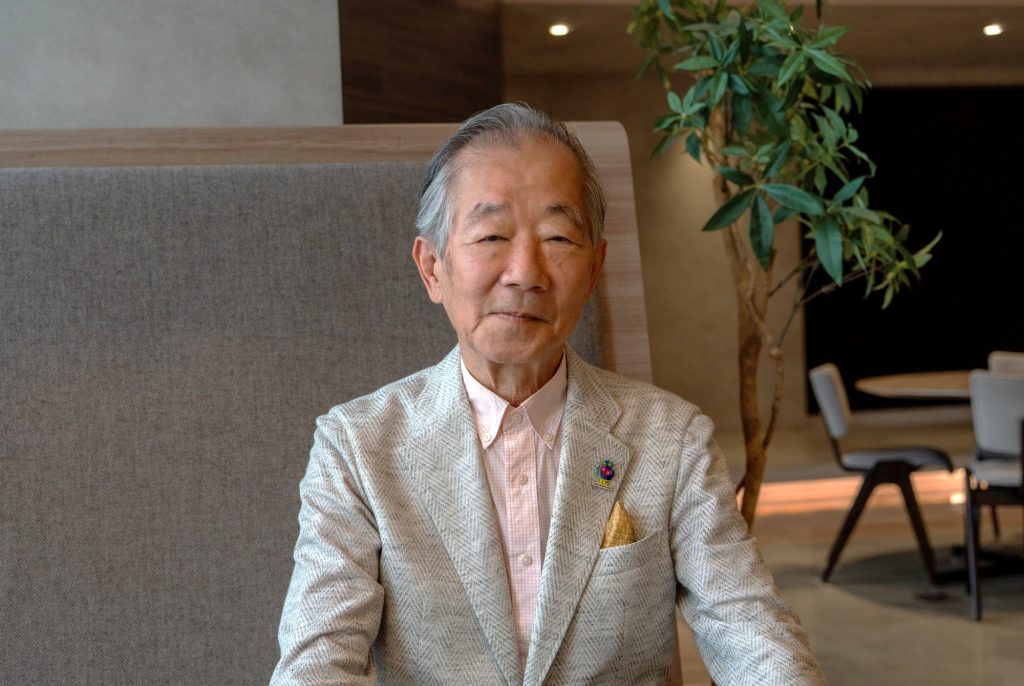
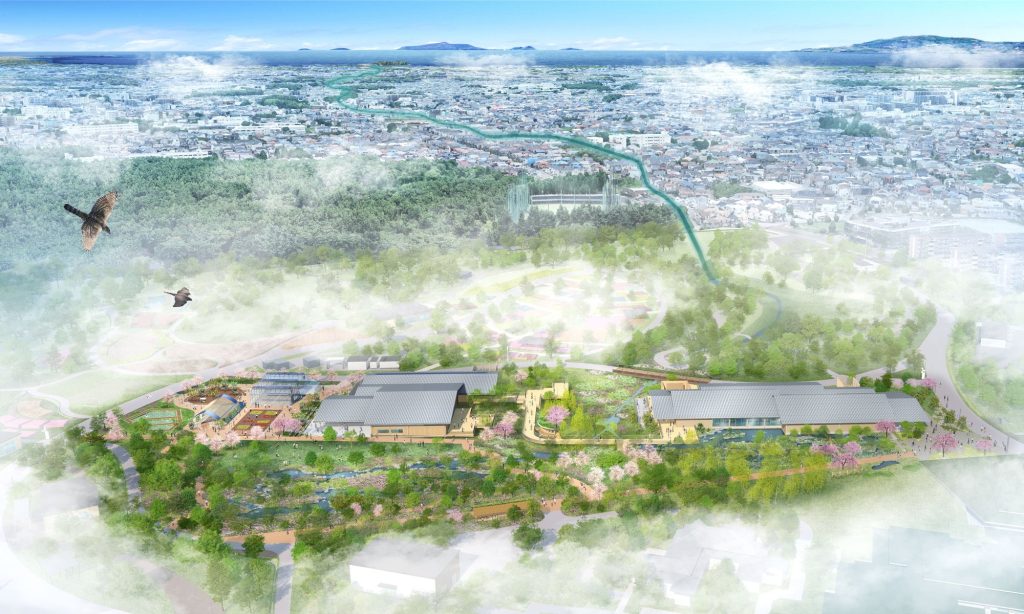
The Japan Pavilion and Garden is one of the main attractions of the International Horticultural Expo 2027 (GREEN×EXPO 2027), and preparations for it are being led jointly by the Ministry of Land, Infrastructure, Transport and Tourism and the Ministry of Agriculture, Forestry and Fisheries.
Under the theme “Scenery of the Future for Happiness,” the expo seeks to present nature-based solutions to global environmental problems. What kind of experience will the Japan Pavilion and Garden offer visitors there?
We spoke with Chief Director Toshitaro Minomo, who oversees the project as a whole, about the role and purpose of the Japan Pavilion and Garden and the thinking behind its exhibition concept, “Reconsidering the Japanese View of Nature, Moving Toward the Future.”
What Does the “Japan Pavilion and Garden” Seek to Convey?
— GREEN×EXPO 2027 takes up the broad theme of the environment, going beyond horticulture. What message will the Japan Pavilion and Garden send there?
Minomo: Hosting an international exposition and exhibiting the Japan Pavilion and Garden are both vitally important missions: through them, Japan shows the role it should fulfill as a member of the global community, with a message to match. If the recent Expo 2025 Osaka, Kansai pointed to new possibilities for “civilization,” then this expo, as a horticultural expo, has great significance in presenting a future from the perspectives of “coexistence with the environment” and “culture,” and the message from the Japan Pavilion and Garden needs that perspective too.
— How is this perspective of “coexistence with the environment” tied to the challenges Japan faces today?
Minomo: Today most of Japan’s population is concentrated in urban areas, a heavier urban skew than in other major countries. While cities grow ever denser, rural areas see more and more farmland and forest left untended, which has become one factor behind the increasingly severe weather disasters of recent years. Against this national land challenge of “overcrowded cities and depopulated regions,” presenting, through flowers and greenery, a sustainable way of living with the environment that carries on to the next generation is an urgent theme the nation must address.
— What approach will the Japan Pavilion and Garden take to that challenge?
Minomo: Rather than overcoming nature by “force,” we will rebuild the traditional way of thinking of Japan and its people, who have lived in coexistence with nature, as a “proposal fit for the Reiwa era.” And rather than merely stating it as a philosophy, we will communicate it directly to the world through the real spatial experience of a garden and exhibitions.
The “Japanese View of Nature” and the “Value of Greenery” We Hope to Convey Through the Whole of the Japan Pavilion and Garden
— Does “reconsidering the Japanese view of nature,” in the concept of the Japan Pavilion and Garden, mean shining a light on Japanese tradition?
Minomo: The concept of the Japan Pavilion and Garden is “Reconsidering the Japanese View of Nature, Moving Toward the Future.” Behind the first half lie the value of nature in Japan’s land and the sense of value the Japanese people hold toward nature. In the second half, “moving toward the future,” we have placed our hope that this expo will be more than an introduction to tradition, and will instead create new value where tradition and a vision of the future meet. Rather than bringing out the Japanese view of nature of old just as it was, we reread it in light of today’s challenges and carry it on to the next era. That is the meaning we put into the word “reconsidering.”
— In expressing that view of nature, the Japan Pavilion and Garden uses the word for greenery, midori, written in hiragana. What is the intention there?
Minomo: This expo is GREEN×EXPO 2027. The kanji for “green” alone cannot capture the full richness of the idea: Japanese has other characters for green, such as 翠 (jade green) and 碧 (blue-green), and even the spelling 美土里, “beautiful soil and village.” To convey this distinctively Japanese richness, we sometimes deliberately write midori in hiragana. The midori we want to convey has three important facets.
- Midori of living: gardens, parks and other nearby greenery that enriches people’s daily lives
- Midori of production: farmland such as rice paddies and fields, the source of our food and livelihoods
- Midori of life: deep mountains and headwater forests that harbor the lives of living things and protect the land
The International Horticultural Expo 2027 (GREEN×EXPO 2027) must be more than a place to admire flowers: it needs to be a place where visitors experience, through the space as a whole, how these three kinds of midori, of living, production and life, support our lives and our livelihoods. The Japan Pavilion and Garden places great weight on this point too.
— So the stance is to coexist with nature rather than conquer it. Does this overlap with your own research and your career in landscape architecture?
Minomo: It is the very origin of my field, landscape architecture. When I was young I encountered the book Design with Nature. Its teaching was to design not by overcoming nature with human power, but by adapting rationally to nature’s own logic. As the natural disasters of recent years show, there are limits to human control over nature. Our task is to take the wisdom of “living with nature” handed down by those before us, adapt and evolve it for the changes in today’s society, and bring it in. That very philosophy runs at the foundation of the Japan Pavilion and Garden.
The Design Philosophy of the Japan Pavilion and Garden as a Whole, and the Story We Want Visitors to Experience
— What do you value most in the design philosophy of the garden as a whole?
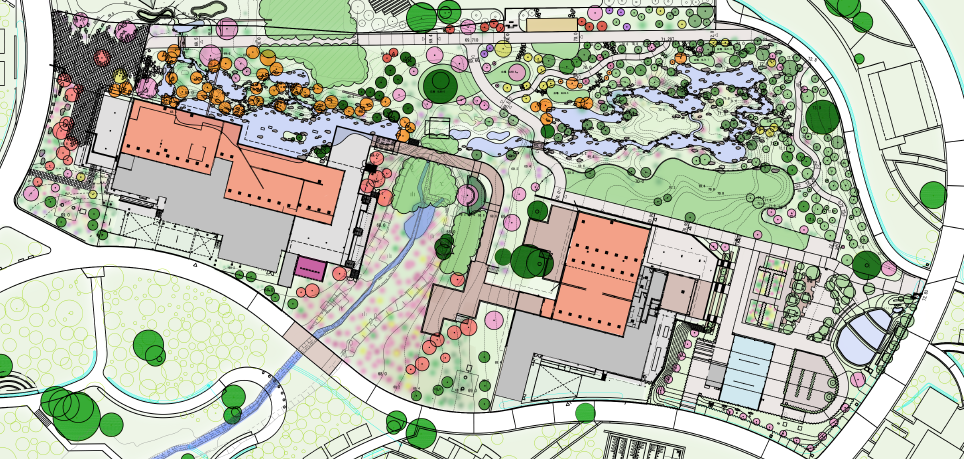
Minomo: One thing is to read carefully the potential held by the land itself that we are planning for. When I first visited the site, I felt how pleasantly the terrain, rising gently from west to east, leads on to the satoyama, the woodland at the edge of the village, beyond it, and we set a direction for the plan that makes the most of this site’s own character. At the same time, this project is a collaboration among many people. The lead in each field brings their expertise to bear, yet rather than each working separately, they bring it all together as a single team. My own role is not to give detailed instructions but to watch how each of them reads the character of the land and gives it form.
— How do you think about the relationship between the buildings and the garden?
Minomo: The Japan Pavilion and Garden is built around the idea of teioku ichinyo, garden and building as one. It is the philosophy of planning building and garden not as separate things but as a single, harmonious whole. With advances in air conditioning, the relationship between building and garden that once naturally joined them has been lost. From here on, though, we should think of indoors and outdoors more as one. At the Japan Pavilion and Garden, we aim to recover that unity in several places.
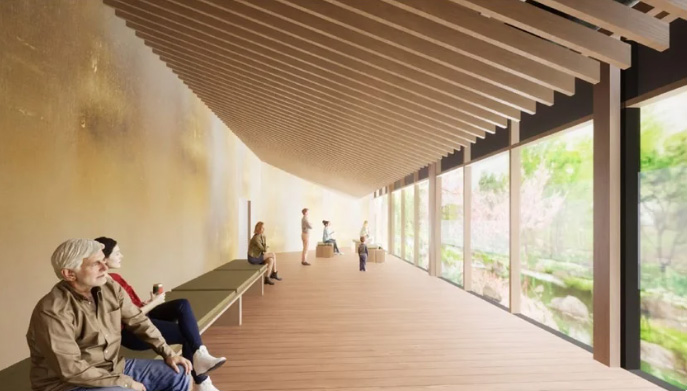
— We hear that the expression “Reiwa Japanese Garden” also carries a particular intention.
Minomo: It does not simply mean a Japanese garden built in the Reiwa era. In light of the large-scale floods and other disasters of recent years, we conceived it as one model for how our national land should be from here on, and we are attempting to work that concept into the form of a garden. There is the garden close to people, the garden spreading out a little farther away, and then the grove that becomes a forest. Making the most of the site’s location at the headwaters of the Izumi River, these unfold as a single continuous composition: the Garden of Elegance, the Garden of Blessings, and the Garden of Livelihood.
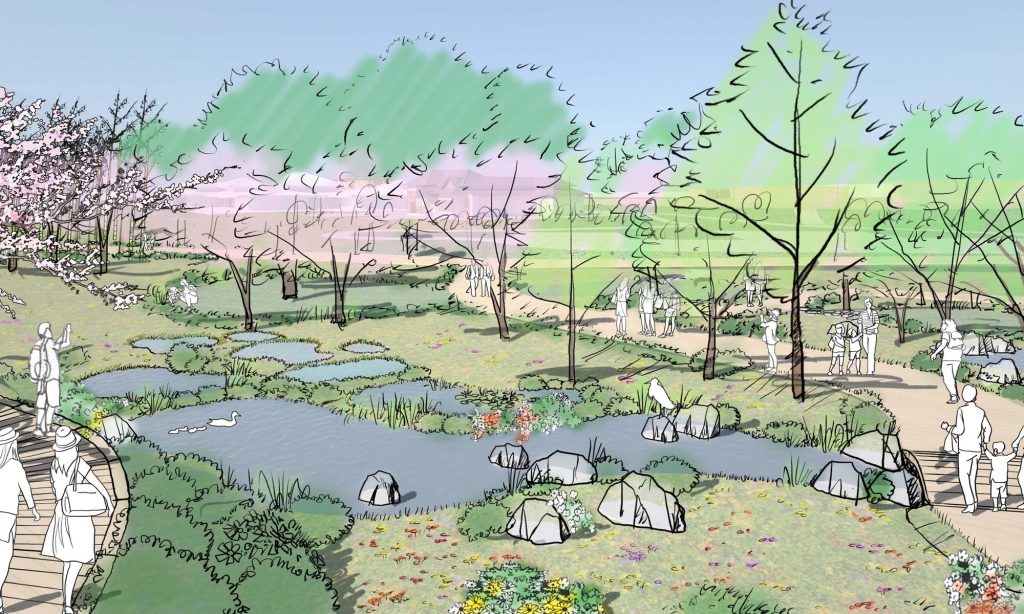
— With so many diverse elements, from architecture to exhibitions, can the whole be brought together as one?
Minomo: What brings it all together is the idea of “unity in diversity.” Each building and exhibition expresses its own individuality, yet as a whole they appear in harmony as a single landscape. That sense of balance runs through the entire garden.
— What change or realization do you hope the Japan Pavilion and Garden will bring about in visitors?
Minomo: What we merely hear as knowledge is forgotten surprisingly quickly, but what we have actually seen, and still more what we have experienced, stays in our memory. That is why we also want to provide, in earnest, places of experience where a visit to the Japan Pavilion and Garden becomes a starting point for what people do afterward. The challenges of the global environment will not be solved because someone tells us to change; they come closer to a solution only as each of us changes our own behavior, treating the problem as our own. We hope that the experience of the Japan Pavilion and Garden will lead even one more person to act in ways that are kind to nature.
— What will visitors from overseas gain from their experience of the Japan Pavilion and Garden?
Minomo: To visitors from overseas, we want to communicate what Japan has experienced and what it has reexamined. In particular, for people from the countries of Monsoon Asia, which have likewise lived with rice-paddy agriculture and natural disasters, nothing would please us more than if Japan’s efforts offered some valuable hint they could take home. I believe that can well lead, in time, to forms of international cooperation.
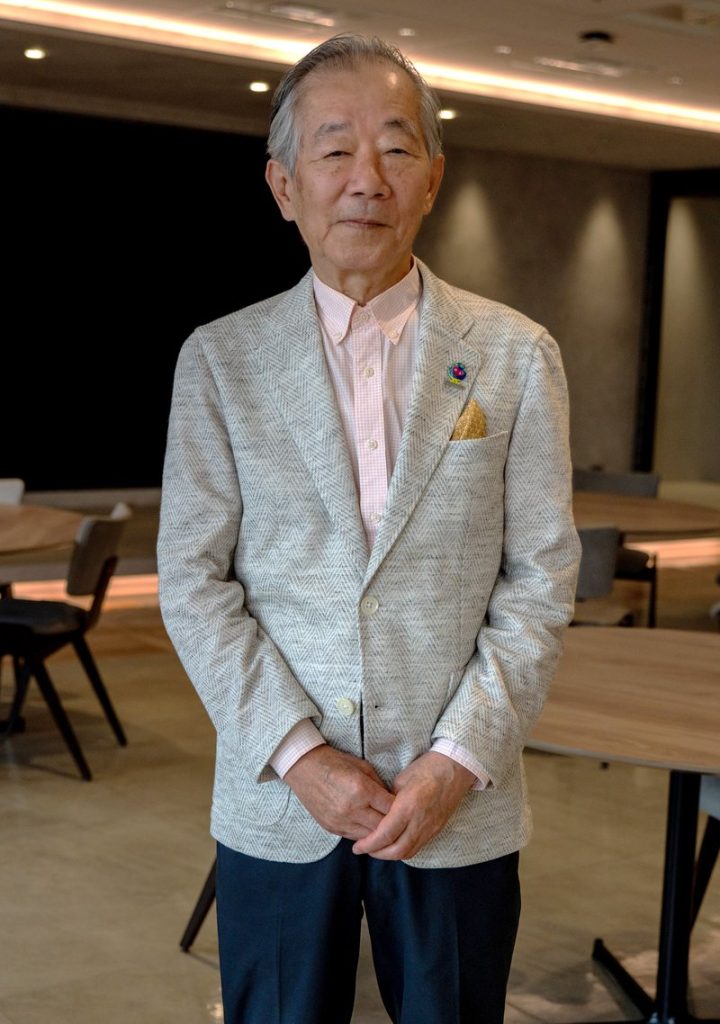
Toshitaro Minomo
Chief Director
Professor Emeritus, Tokyo University of Agriculture; Doctor of Agriculture
Honorary Fellow, Prefectural University of Kumamoto
Fellow, Registered Landscape Architect (RLA)