
Reconsidering the Japanese View of Nature, Moving Toward the Future

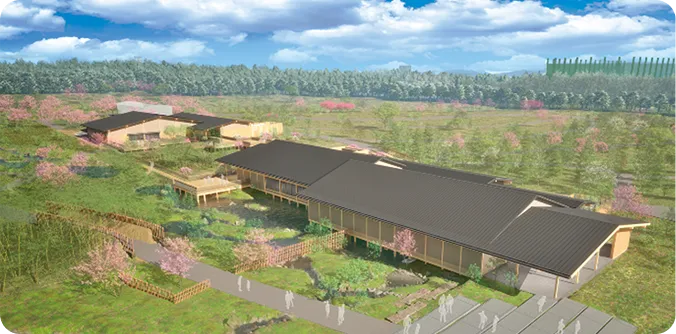
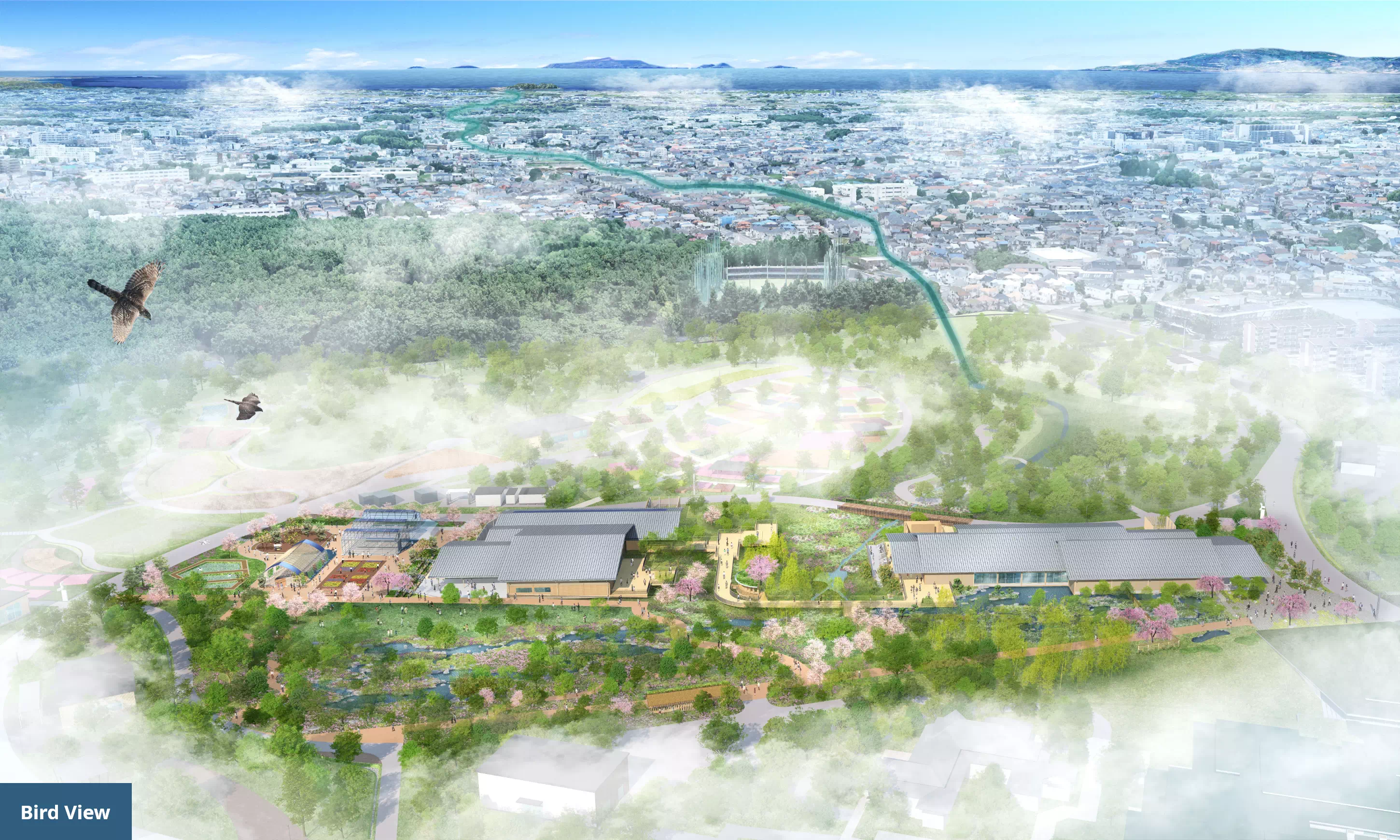
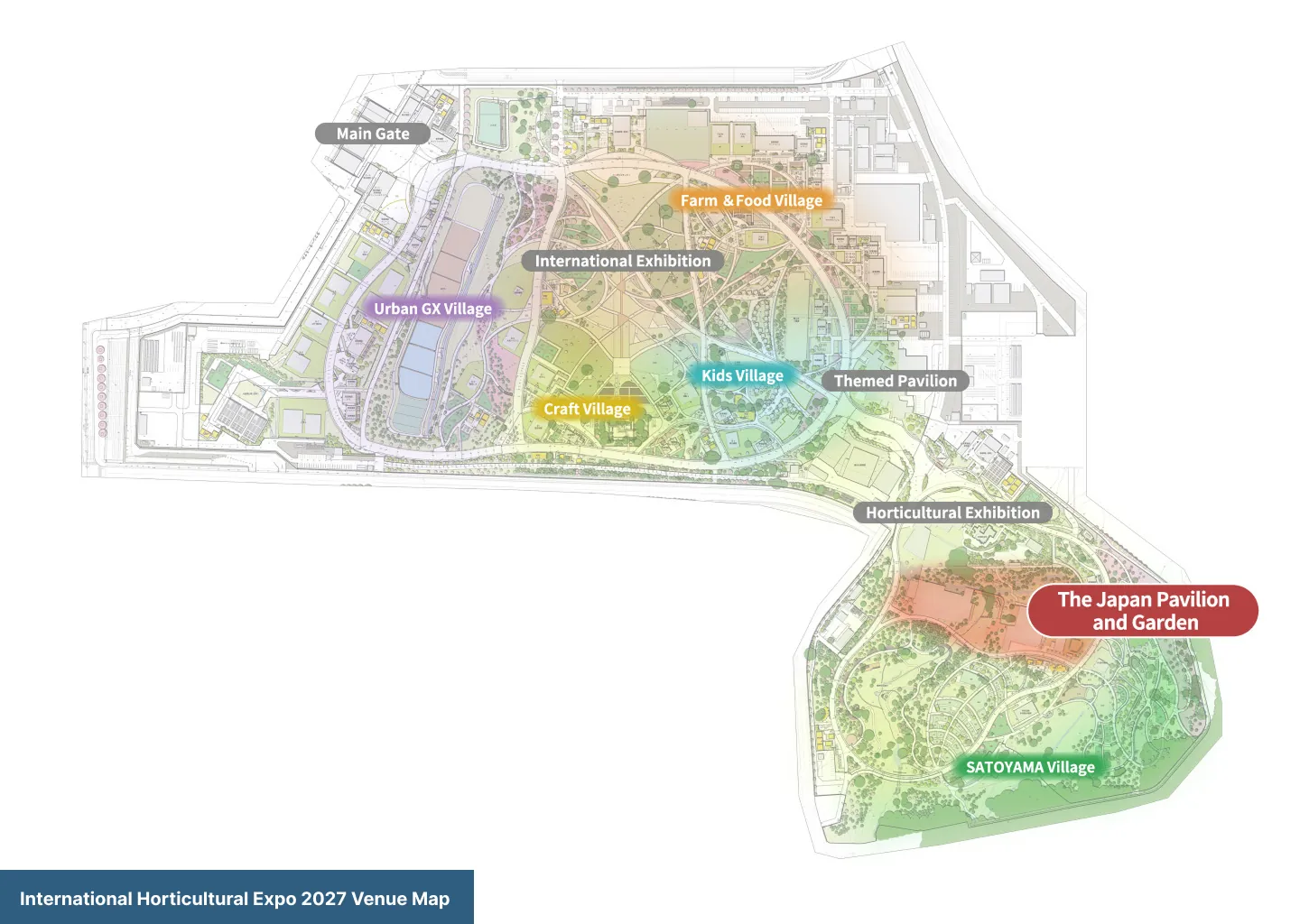
The Japan Pavilion and Garden will be the largest exhibition area at the venue, covering approximately 2.5 hectares. Located at the headwaters of the Izumi River, it will consist of a garden and exhibition pavilions designed with careful consideration for reducing environmental impact.

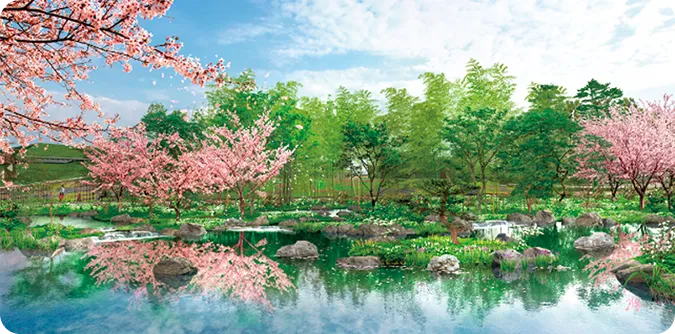
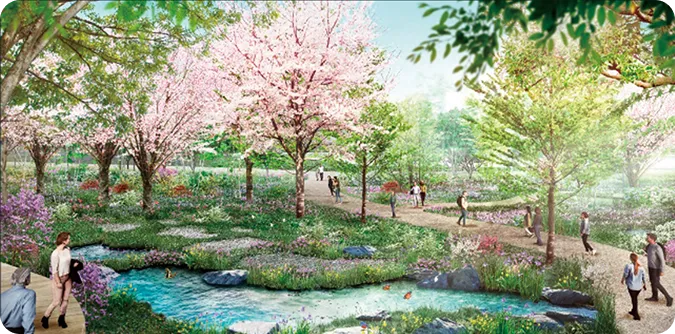
The “Reiwa Japanese Garden” will incorporate green infrastructure, including water circulation and the restoration of local vegetation, while drawing on the culture and techniques of traditional Japanese gardens.

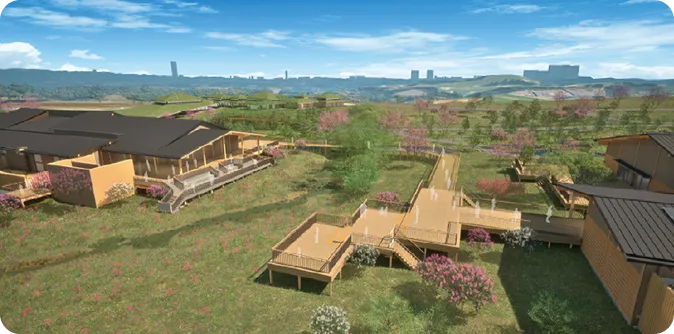
The exhibition pavilions will be built as elevated wooden structures divided into east and west buildings, in consideration of their location at the river’s headwaters. With features such as earthen walls, the architecture will harmonize with the surrounding landscape.

Inside the pavilions, visitors will encounter ways of living and coexisting with nature that have been passed down across Japan. The exhibition will also introduce cultural expressions born from the relationship between people, plants, and nature, including ikebana and bonsai. Through these experiences, the Japan Pavilion and Garden will present a vision of the future created by greenery, and share with the world clues for solving social issues and inspiring behavioral change.

日本政府苑の鳥瞰パースイメージ 2027年国際園芸博覧会の会場全体図。日本政府苑エリアをカラーで強調

Overview of the Japan Pavilion and Garden

Exhibition Theme and Overview

Exhibition Theme

The Japanese View of Nature

Exhibition Overview

Visitors will experience Japan's diverse natural environments through an immersive theater exhibition. The exhibition will also present the wisdom and techniques that people have incorporated into daily life through their relationships with nature, as well as displays of Japanese culture, including ikebana by the heads of various schools and bonsai from the collection of the Imperial Household Agency.

In addition, the exhibition will invite visitors to become aware of and reflect on recent global environmental issues and changes in the natural environment close to home. It will also introduce Japanese technologies and initiatives that contribute to solving these challenges, including actual equipment and outdoor exhibits.
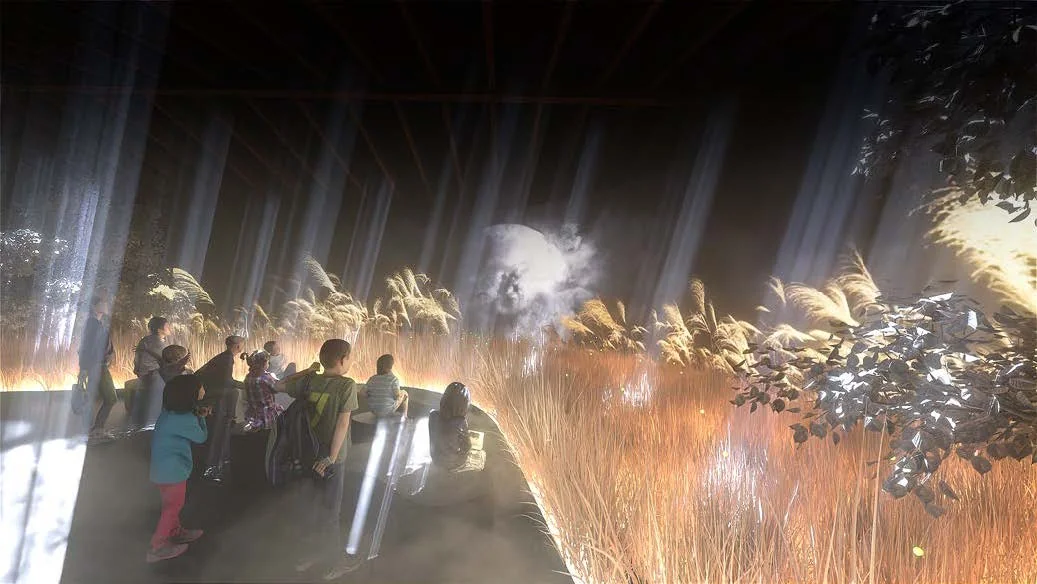
体感型のシアター展示イメージ
Immersive theater exhibition image
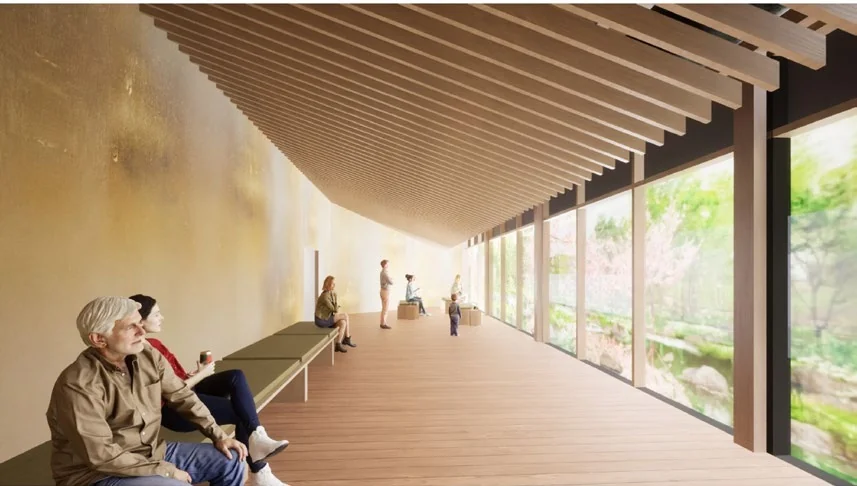
庭鑑賞エリアイメージ
Garden viewing area image
Japanese Cultural Exhibitions
(1) Ikebana Exhibition

For the ikebana exhibition, heads and other leading figures of major Japanese ikebana schools belonging to the Japan Ikebana Art Association are scheduled to display works in six different flower arrangement styles, one style at a time for each exhibition period. The exhibition is planned as a spatial presentation that expresses the Japanese view of nature and sense of beauty.

Planned cooperating ikebana schools:
Sogetsu School, Ikenobo, Ryusei-ha, Ohara School, and others
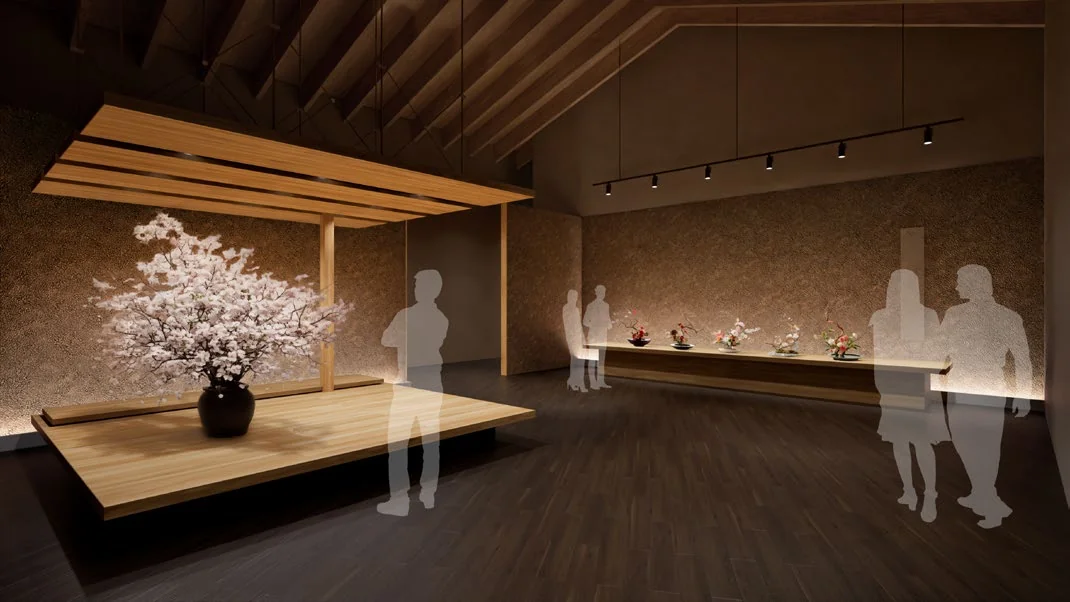
いけばな展示イメージ
Ikebana exhibition image
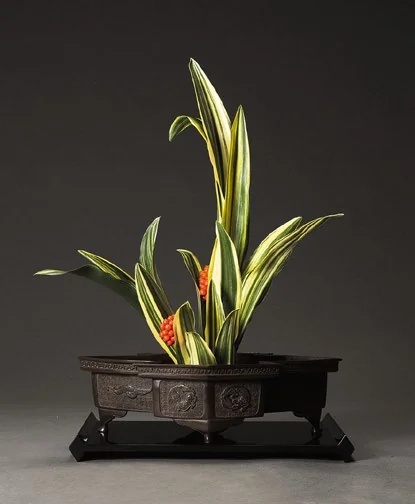
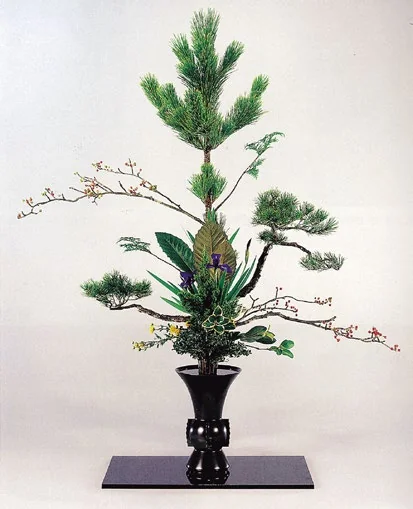
立花のいけばな作品
Rikka
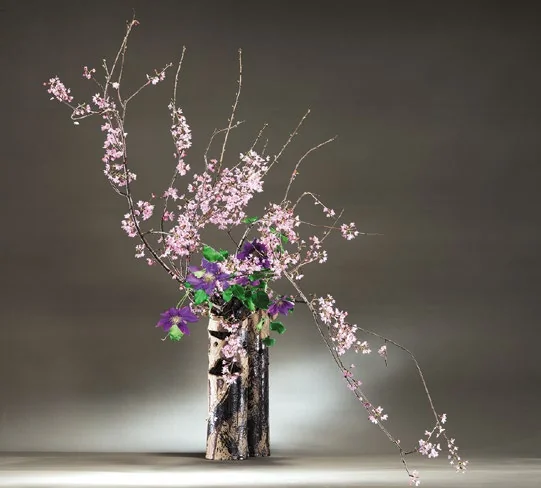
抛入・瓶花のいけばな作品
Nageire / Heika
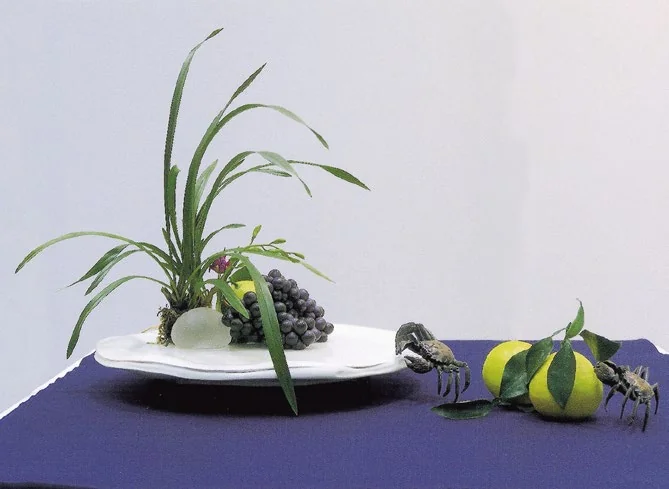
生花のいけばな作品
Seika / Shoka
文人花のいけばな作品
Bunjinbana
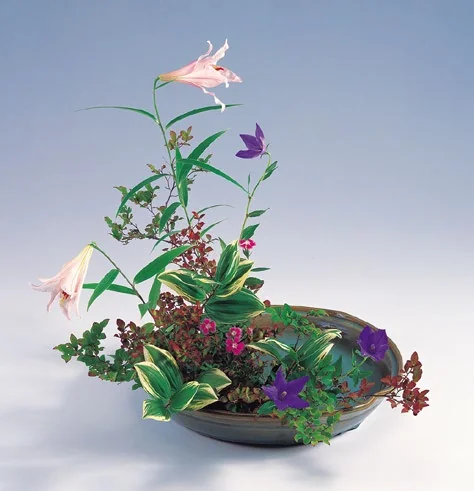
盛花のいけばな作品
Moribana
自由花のいけばな作品
Jiyubana / Jiyuka
(2) Bonsai Exhibition

For the bonsai exhibition, bonsai that have been managed and passed down by the Imperial Household Agency over many years at the Omichi Garden of the Imperial Palace are scheduled to be displayed, with the exhibits changed twice during the exhibition period.
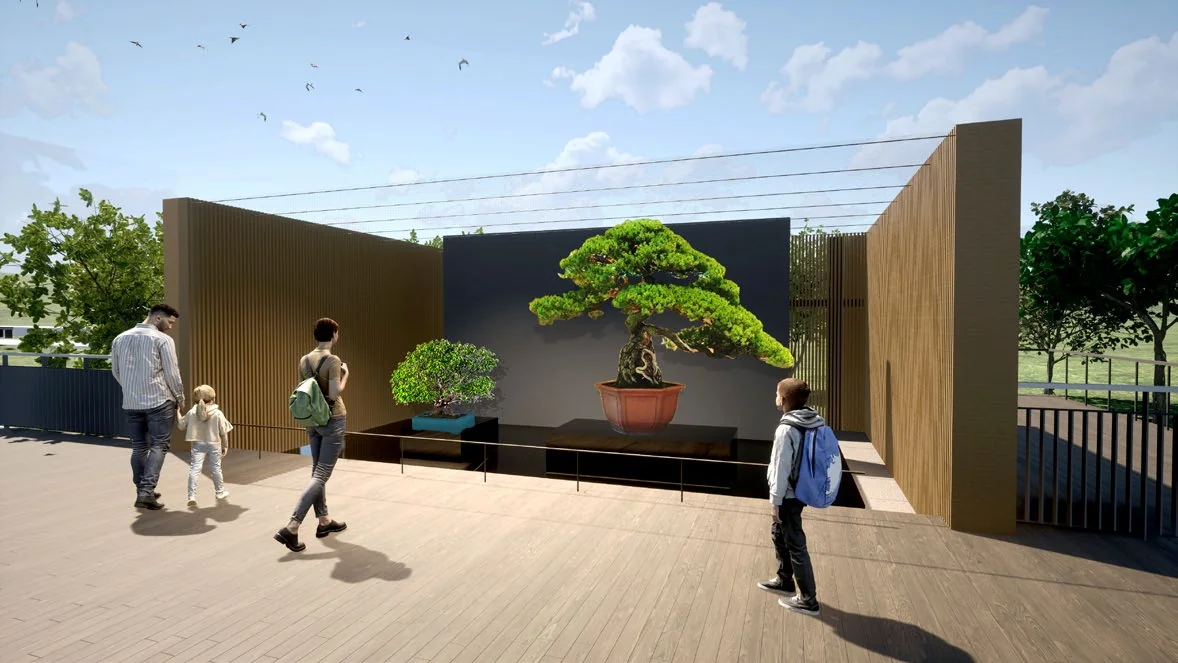
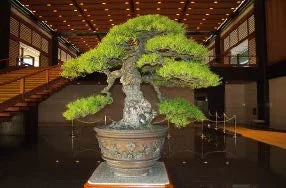
盆栽展示イメージ
Bonsai exhibition image
黒松の盆栽
Species: Japanese black pine / Name: Kashima
Age: 390 years
A bonsai of high historical value that was also exhibited at Expo '70 in Osaka, Japan.
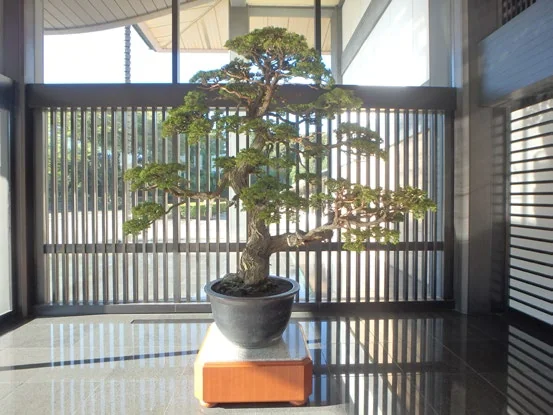
檜の盆栽
Species: Japanese cypress
Age: 340 years
This bonsai was displayed at the Imperial Palace for the Coming-of-Age Ceremony of His Imperial Highness Prince Hisahito. This will be its first public exhibition outside the Imperial Palace.
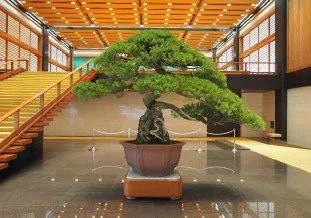
五葉松の盆栽
Species: Japanese white pine / Name: Neagari
Age: 390 years
This bonsai is displayed when state guests from overseas visit the Imperial Palace. This will be its first public exhibition outside the Imperial Palace.
Garden and Architecture

The “Reiwa Japanese Garden” and Architecture in Harmony with the Satoyama Landscape

Taking into account the site's location at the headwaters of the Izumi River and the surrounding natural environment, the garden and pavilions will be designed as one integrated space based on the Japanese architectural concept of teioku ichinyo.

Teioku ichinyo refers to the idea in Japanese architecture that a garden and building are harmonized and integrated as a single space.

The “Reiwa Japanese Garden”

The garden will draw on the culture and techniques of traditional Japanese gardens while creating a space that expresses the spirit of the Reiwa era.

In response to an age of increasingly severe natural disasters, the garden will incorporate concepts of basin-wide flood control and green infrastructure through ideas like water, carbon, and nitrogen circulation.

令和日本の庭のイメージ写真 令和日本の庭の庭園パースイメージ
Exhibition Pavilions: Architecture in Harmony with the Satoyama Landscape

In consideration of the site's location at the headwaters of the Izumi River, the exhibition pavilions will be built as elevated wooden structures divided into east and west buildings, reducing their impact on the natural environment.

The design will use materials such as earthen walls to create an appearance suited to the local landscape. Materials and construction methods will also be selected with a view to their effective use after the Expo.

展示館の外観パースイメージ 展示館と里山の風景パースイメージ

Related Programs

Creative Collaboration with Future Generations

Inquiry-Based Learning Program

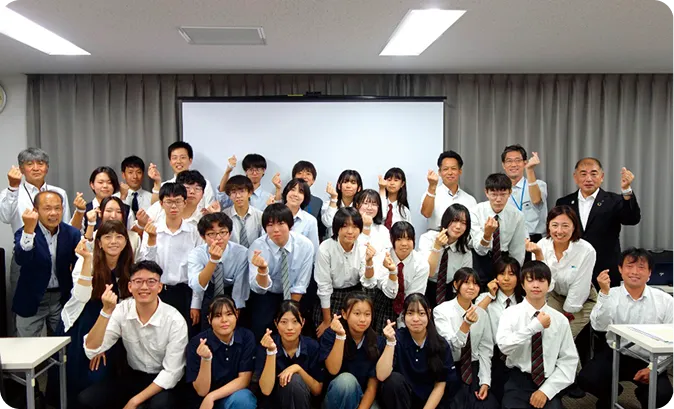
Before GREEN×EXPO 2027 opens, young people who will lead the future will take part in activities to improve familiar local environments, however small. Through these efforts, they will learn that environmental challenges are shared around the world and communicate their findings globally, helping to create a lasting legacy for GREEN×EXPO 2027.

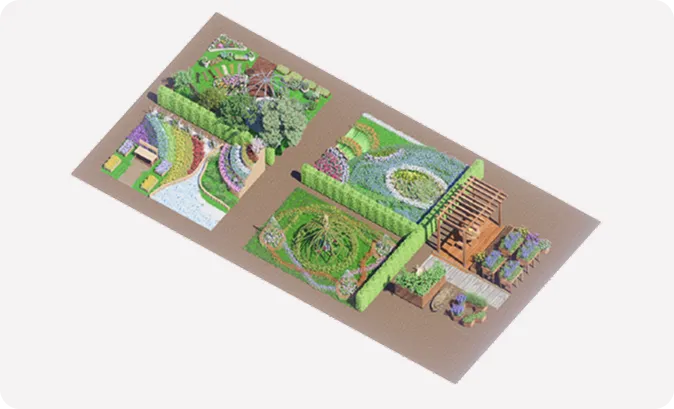
"Mirai Saki Garden" Created by High School Students

Groups of high school students from five schools across Japan will create theme gardens in the Government Exhibition Area, based on the theme of landscapes created with flowers and greenery.

探究プログラムに参加する学生たちの集合写真 高校生が創る未来咲きガーデンのイメージ

Directors

1人目のディレクターの写真

Toshitaro Minomo

Chief Director

  • Professor Emeritus, Tokyo University of Agriculture; Doctor of Agriculture
  • Honorary Fellow, Prefectural University of Kumamoto
  • Advisor, Parks and Recreation Foundation
  • Fellow, Registered Landscape Architect
View Details

Profile

Toshitaro Minomo is a landscape researcher specializing in landscape architecture and environmental planning. He has long been active in the areas of urban park policy and regional landscape development, working on urban green space policy and community development through collaboration among universities, research institutions, and government agencies.

Career Highlights

  • Professor and Vice President, Tokyo University of Agriculture
  • Founding President, Prefectural University of Kumamoto
  • President, Parks and Recreation Foundation
  • Director, Kumamoto Urban Policy Research Institute
  • Founding Chair, Japan Federation of Landscape Architects
  • Recipient of the Uehara Keiji Award from the Japanese Institute of Landscape Architecture, 2019
2人目のディレクターの写真

Toshihiro Inoue

Director

  • Senior Managing Director, Ueyoshi Landscape Co., Ltd.
View Details

Profile

Toshihiro Inoue is a garden designer born into a long-established landscaping company in Kyoto. He has created many gardens that combine traditional garden techniques with contemporary landscape design. His work is highly regarded in gardens for shrines, temples, and cultural facilities, including award-winning projects recognized by the Japanese Institute of Landscape Architecture.

Career Highlights

  • Graduated from the Department of Landscape Architecture, Faculty of Agriculture, Tokyo University of Agriculture
  • Studied under Kiyoshi Nozawa and Takashi Suzuki at Nozawa Suzuki Landscape Design Office
  • Created the garden for the shrine office commemorating the 1,300th anniversary of Fushimi Inari Taisha
  • Worked on landscape improvement for the precincts of Gango-ji Temple, a World Cultural Heritage site
  • Created the Omi Garden at Biwako Ikeda Memorial Park
  • Recipient of the Japanese Institute of Landscape Architecture Award, Design Works Category, 2023
  • Led the Reiwa-era renovation of the "Garden of Snow" at Myoman-ji Temple, head temple of the Kenpon Hokke school
3人目のディレクターの写真

Shouichi Kiriyama

Director

  • Representative Director, Bon Planning Co., Ltd.
  • Part-time Lecturer, Museum Studies Program, Tokyo University of Agriculture
View Details

Profile

Shouichi Kiriyama is a planning director specializing in exhibition planning, regional branding, and museum exhibition design. He has directed numerous exhibition projects for commercial facilities, corporate museums, and factory tour facilities, and has also participated in government research projects and agricultural product branding strategies.

Career Highlights

  • Member, Government Exhibition Planning Committee for the International Horticultural Expo 2027
  • Directed exhibition planning for commercial facilities, corporate museums, and factory tour facilities
  • Advisor for prefectural agricultural product brand strategy and marketing planning
  • Planned and implemented research projects for the Cabinet Office and government ministries
4人目のディレクターの写真

Kiyohito Tamotsu

Director

  • Director, Losfee Co., Ltd.
  • Registered Landscape Architect
  • Migration Director, IFLA World
View Details

Profile

Kiyohito Tamotsu works in landscape-driven architecture and urban development in Japan and overseas. His projects include postwar reconstruction areas, community spaces for migrants, and desert greening initiatives in collaboration with the United Nations. He also teaches Nature-Based Design — including landscape, architecture, urban planning, and agriculture for protection against natural disasters — as part of STEAM education for elementary, junior high, and high school students in Japan and abroad.

Career Highlights

  • Graduated from the Department of Architecture, Kogakuin University; completed master's studies at the University of Copenhagen and the Swedish University of Agricultural Sciences
  • Producer of Japan's outdoor exhibition at the Doha International Horticultural Expo 2023–2024
  • Part-time consultant, International Organization for Migration Iraq, United Nations
  • Invited speaker at COP28 Dubai, Biosphere, and Circular Cities Summit Oman
  • Recipient of awards including the IFLA APR Award, Green Infrastructure Grand Prize Excellence Award, Good Design Gold Award, and LOOP Design Award
  • Designed projects including the National Gallery of Australia, Tivoli Gardens, Doha Japanese School, and the underground villa "Villa Funny"

Overview of the International Horticultural Expo 2027

Theme
Scenery of the Future for Happiness
Duration
March 19, 2027 to September 26, 2027
Location
Yokohama, Kanagawa, Japan (Former Kamiseya Communication Facility)
Site Area
Approximately 100 hectares
Class
A1 (The highest class approved by the International Association of Horticultural Producers and recognized by the Bureau International des Expositions)
TOP